Babylon Balance — Turning Financial Stress Into Clarity
Role Product Designer
Project Duration 4 Months
Introduction
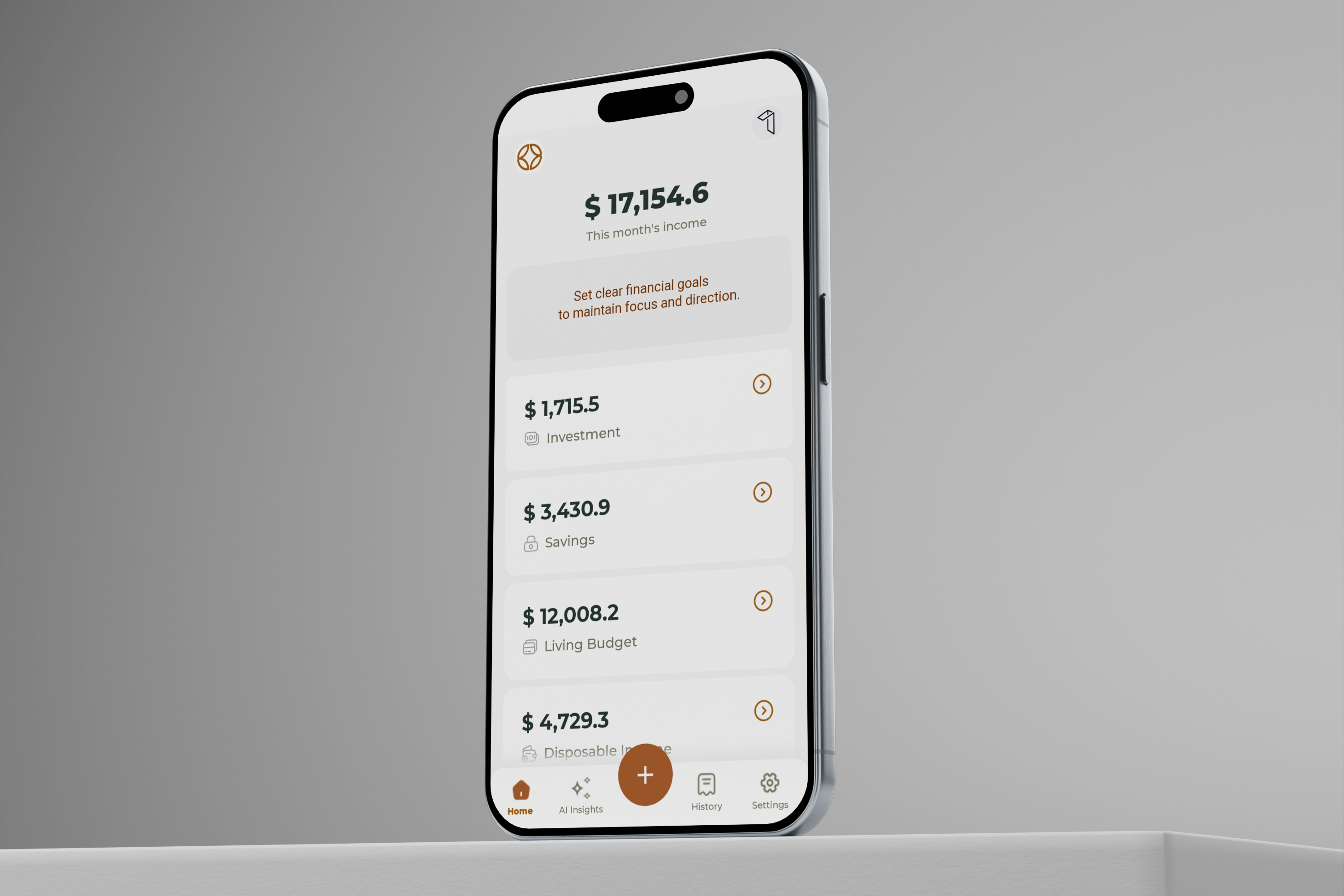
Babylon Balance is a personal finance app designed to help users manage their income with clarity, discipline, and minimal cognitive load. Inspired by principles from "The Richest Man in Babylon", the product focuses on fixed allocation, automatic calculations, and actionable insights rather than complex budgeting systems.
The goal was to create something calm, confidence building experience that removes decision fatigue and helps users build better financial habits through structure rather than control.
Research consistently shows that a large portion of people struggle with: Knowing how much of their income they should be saving or investing, Avoiding overspending on non-essential items and Understanding their true monthly cash flow
The absence of an easy-to-follow, beginner-friendly system creates unnecessary financial stress and limits people’s ability to plan for the future.
Most budgeting apps overwhelm users with excessive categories, manual inputs, and dense charts. While powerful, these tools often fail to sustain long term use because they demand too much effort and constant decision making.
Common user pain points identified:
- Too many choices during setup.
- Manual calculations and adjustments.
- Difficulty understanding what is safe to spend.
- Budgeting tools that feel restrictive or judgmental.
Users need a system that felt supportive, simple, and consistent.
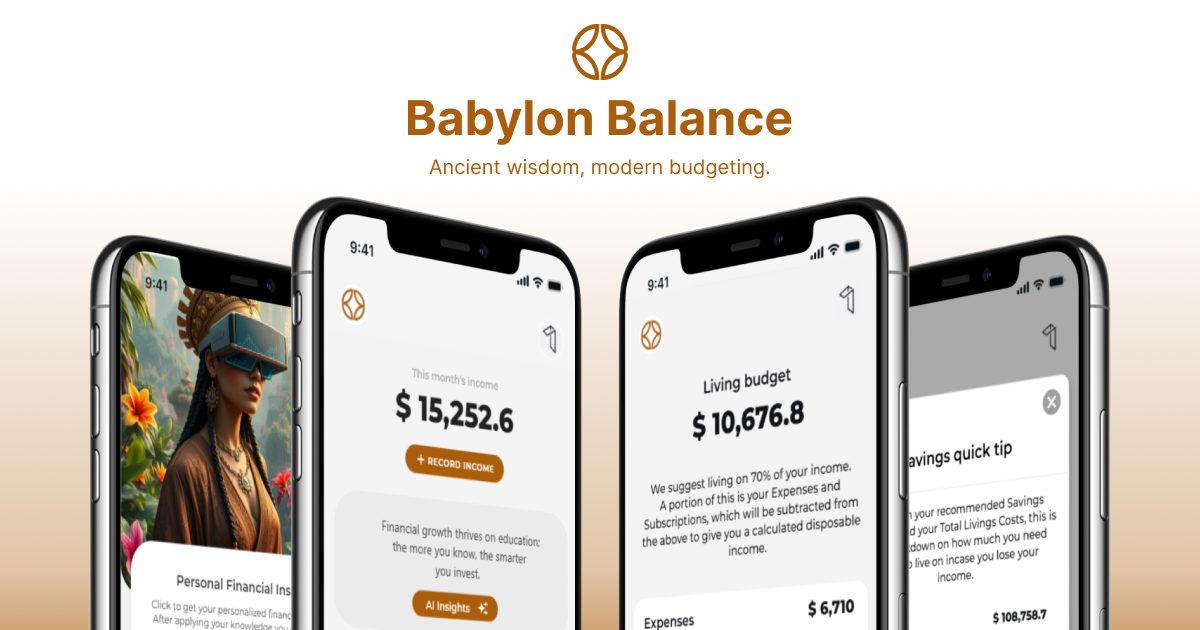
SolutionBabylon Balance introduces a fixed percentage based budgeting model where users only need to enter their monthly income. All allocations, balances, and insights update automatically.
Instead of asking users to define dozens of rules, the product embeds good financial behaviour directly into the system.
Design Approach
Start Simple:
The free version locks percentages to avoid decision fatigue for beginners.
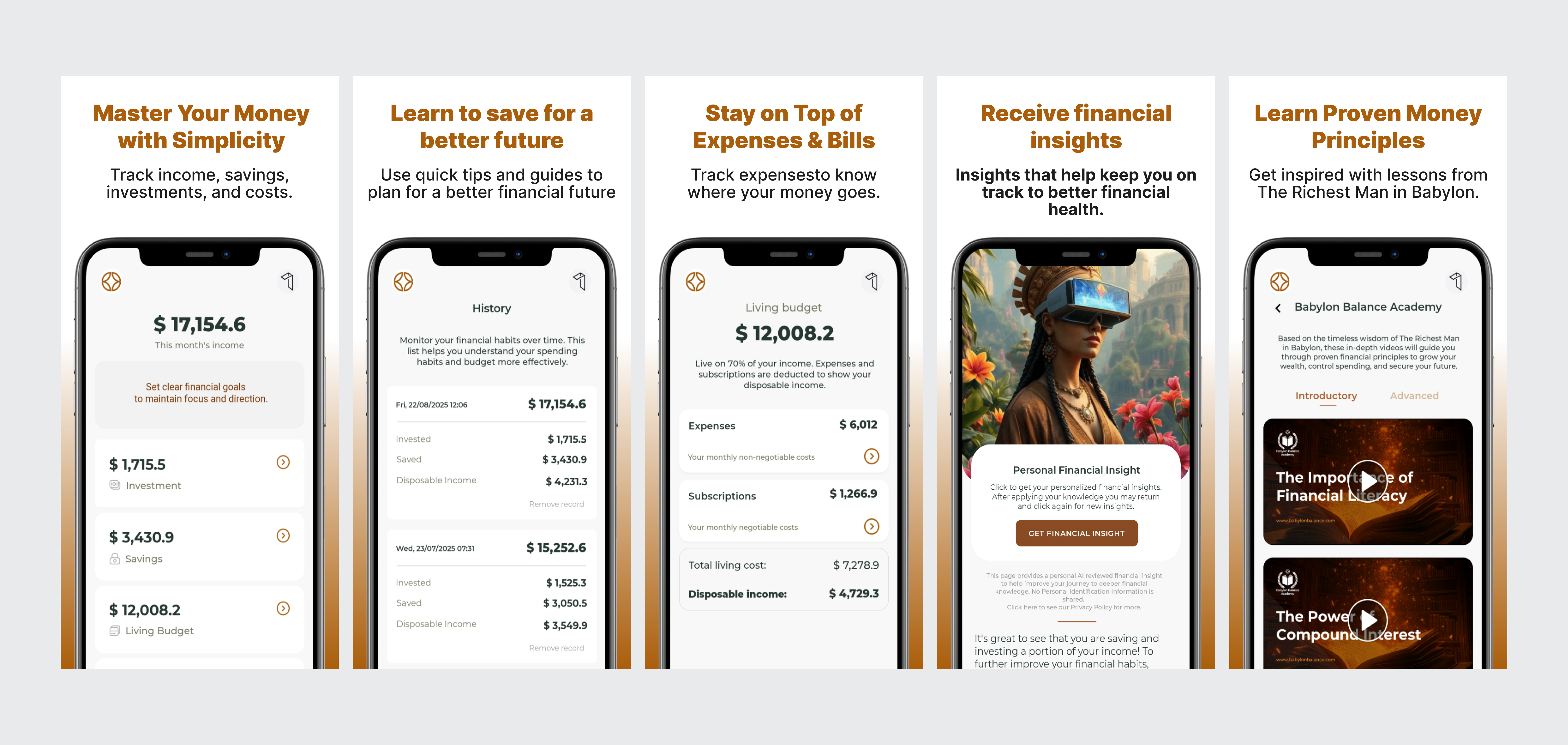
Clarity Over Complexity:The home screen shows essential numbers first - income, allocations, and remaining disposable income with deeper details available in secondary screens.
Motivational Insights:A dedicated section offers small, actionable advice (e.g., “Consider switching to annual billing for Netflix to save X%”).
Future-Proofing:Designed for scale - premium features and AI insights can be layered in without redesigning the app’s core navigation.
Core Experience
Fixed Allocation Model
The free version uses a predefined allocation system:
- 10% Investment
- 20% Savings
- 70% Living Costs
This removes setup friction and guides users toward healthy financial habits by default.
Automatic Calculations
All financial values are calculated automatically using internal formulas. Users never need to manually adjust totals or reconcile numbers.
This reinforces trust and keeps the experience lightweight.
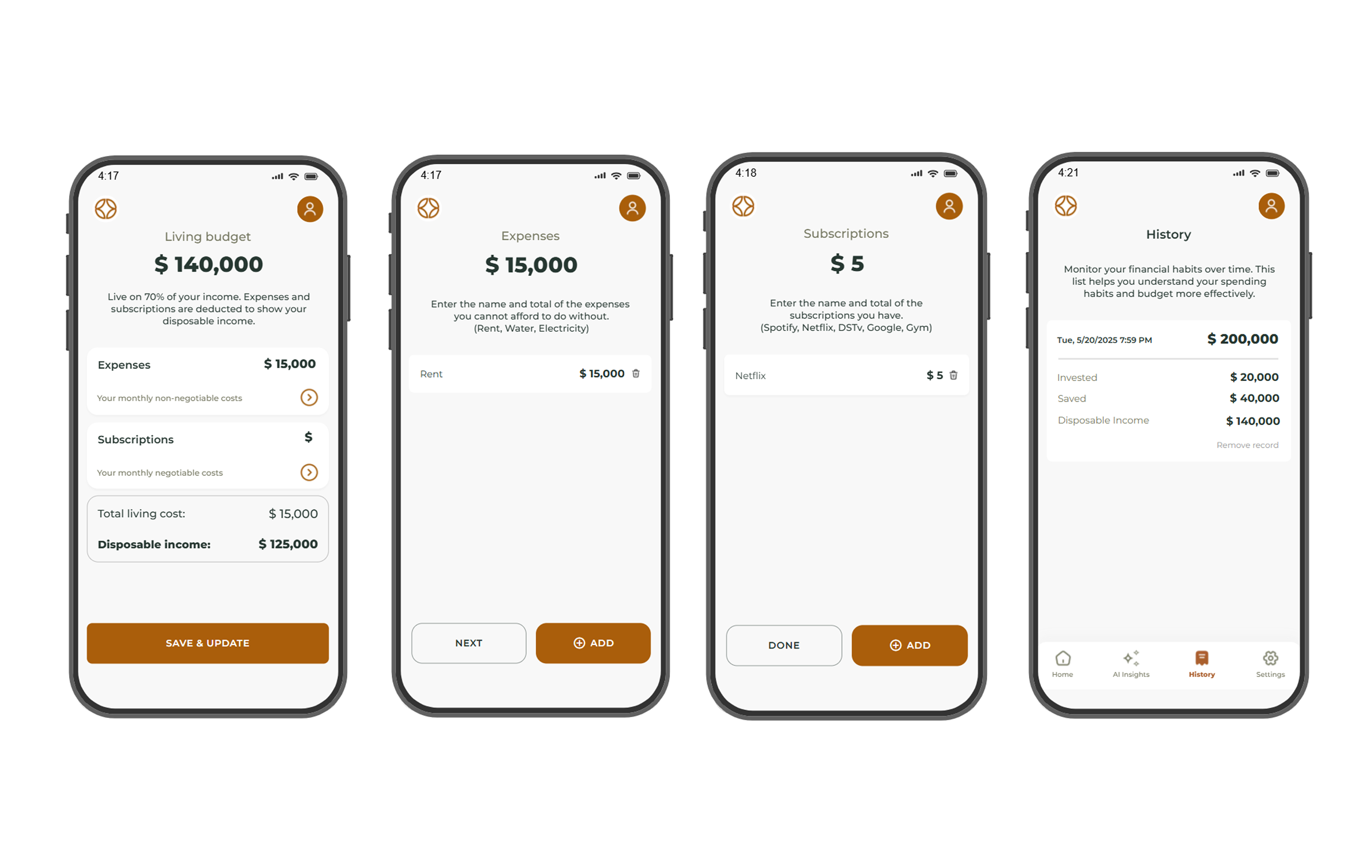
Living costs are divided into three clear categories:
- Expenses
- Subscriptions
- Luxury
As users log expenses, the app immediately shows the remaining disposable income, reinforcing mindful spending in real time.
Disposable Income Highlight
A dedicated, highly visible row on the home screen shows how much money is still safe to spend.
This single element acts as a behavioral anchor and reduces impulsive spending without using warnings or restrictions.
Babylon Balance provides contextual insights that help users optimize spending patterns, such as:
- Suggesting annual subscriptions when they reduce overall cost
- Highlighting recurring expenses that erode disposable income
- Encouraging small, sustainable improvements
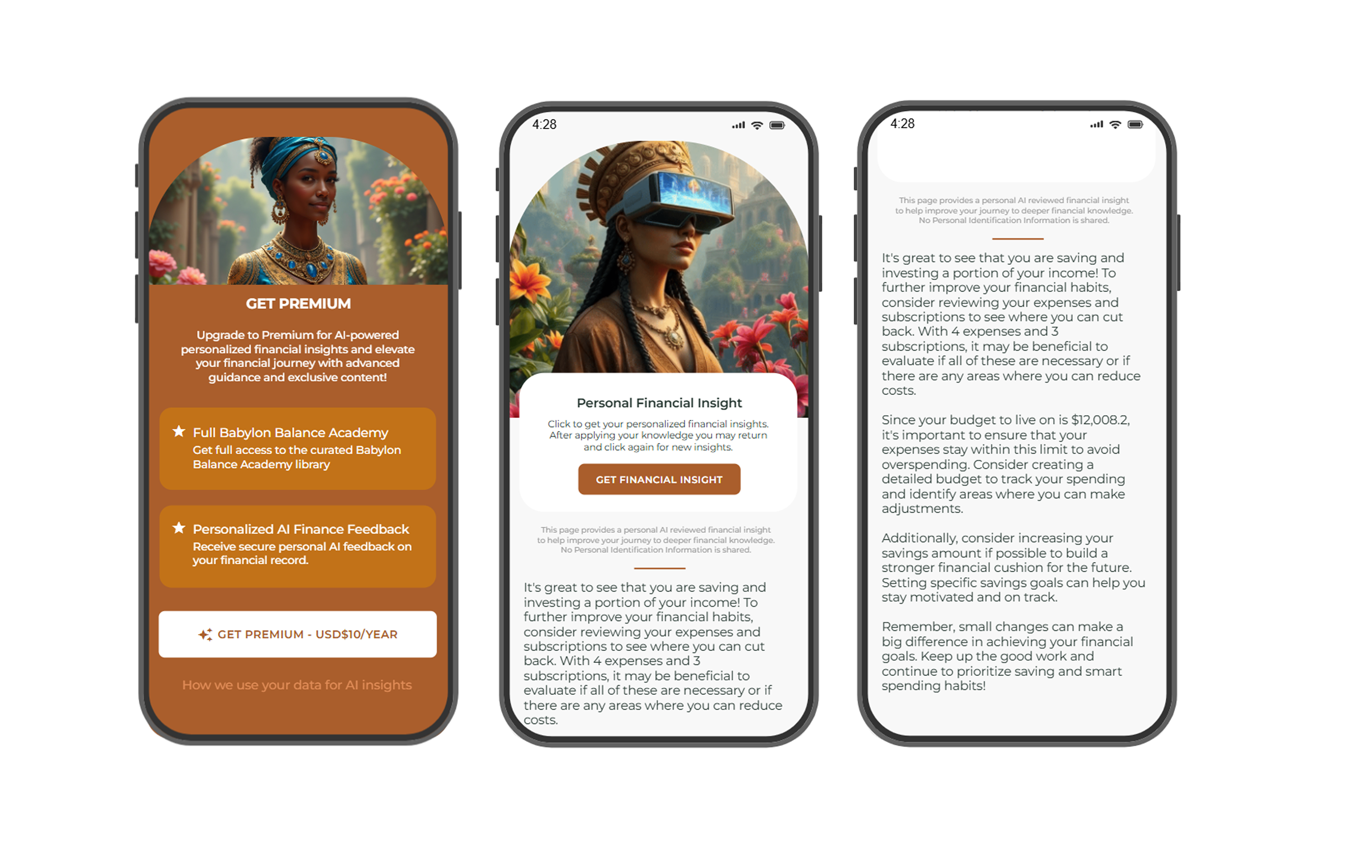
Free users receive curated insights from a predefined database. Premium users unlock AI driven insights based on their actual spending behavior.
History of Spending
Each time a new income is entered, the previous month is archived automatically.
Users can review:
- Income history
- Disposable income trends
- Past insights
This supports reflection without requiring manual tracking.
Monetization Strategy
Babylon Balance uses a transparent, trust aligned model:
- Free version with fixed allocations and static insights
- One time $5 premium unlock for Babylon Balance Library and AI driven insights
There are no pressure driven upsells.
Development Journey & Learnings
Build & Release
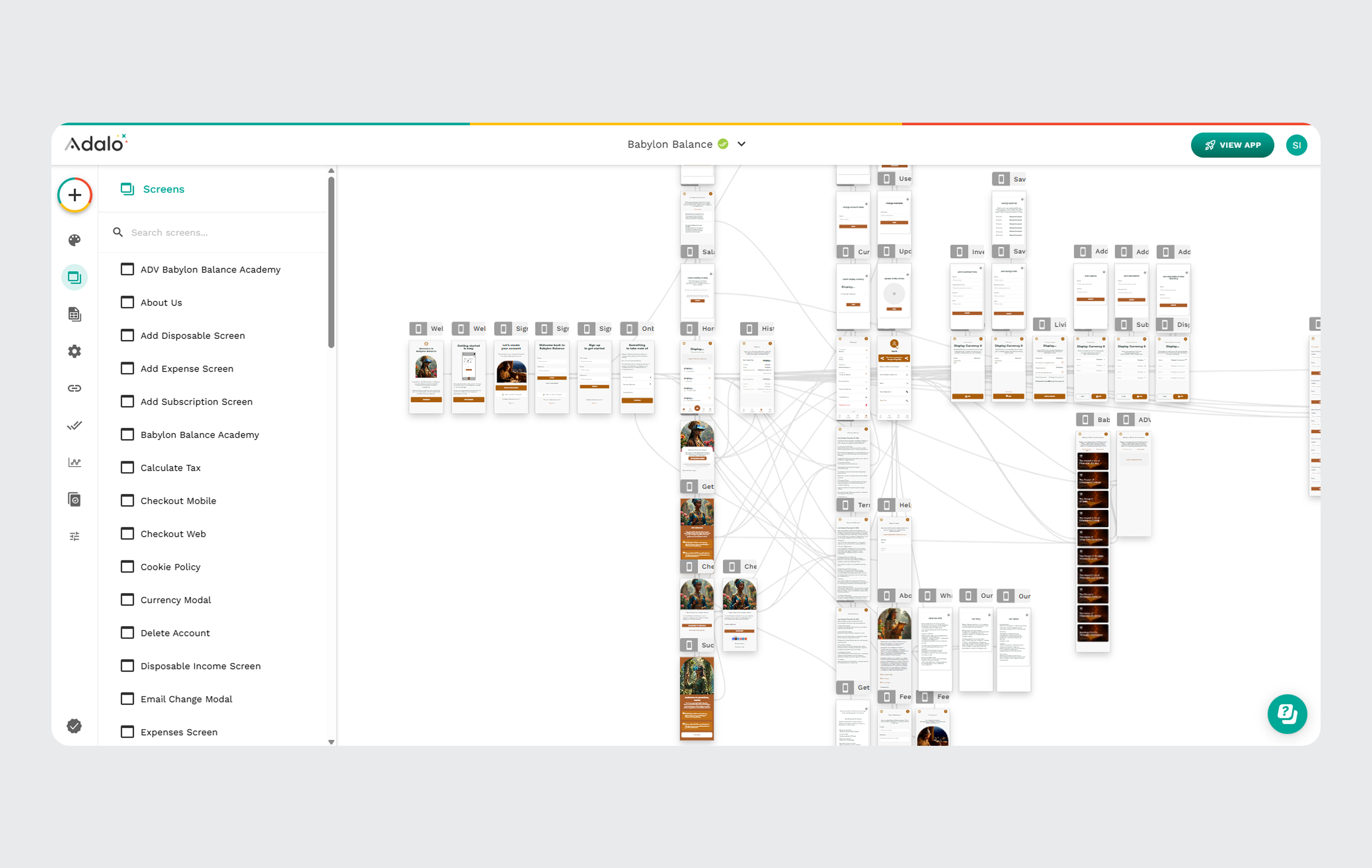
Babylon Balance was built using Adalo, with Zapier and ChatGPT integrated for early stage automation such as capturing in app feedback and routing it into a structured review flow. This approach allowed for rapid iteration without committing to heavy custom development too early.
The app was released to Google Play under Closed Testing for a 14 day period. This phase was used not just for bug discovery, but to understand real world friction points around onboarding, navigation, and perceived performance.
Publishing to Google Play introduced a new layer of complexity that significantly influenced product decisions. Play Console requirements around testing, permissions, app size, and review timelines required careful coordination and documentation.
Adalo Platform Hurdles
Using a no code tool introduced specific challenges such as exporting builds from Adalo required careful version control to avoid breaking live testing tracks. Managing app size became critical, as larger builds negatively affected install completion rates.
Rather than blocking progress, these constraints forced clearer prioritization and tighter scope control.
Feedback from closed testers directly shaped the next iteration of the product:
- UI navigation was simplified to reduce cognitive load
- An in app feedback form was introduced to shorten the feedback loop
- Asset optimization and dependency trimming reduced overall app size
Each change was validated against one question. Does this make the product feel faster, clearer, or more trustworthy?
Key Takeaways
Shipping exposes assumptions that design alone cannot.
No code platforms still require strong technical decision making.
This phase reinforced the value of designing with deployment, distribution, and iteration in mind from day one.
Marketing & Launch Assets
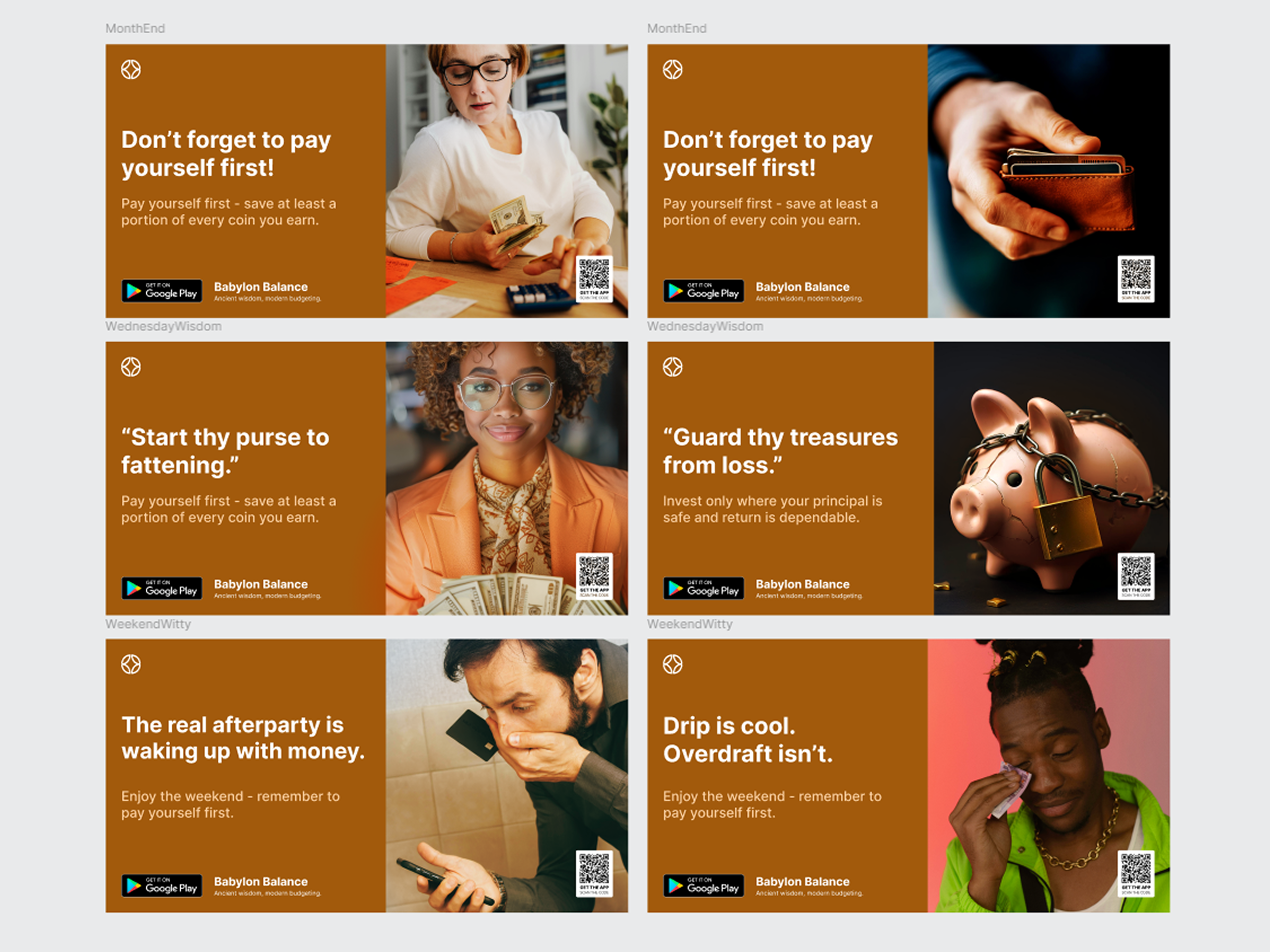
To support launch and early traction, Babylon Balance was accompanied by a focused set of marketing materials designed specifically for Google Ads. This included a series of static image ads and a short promotional video, all aligned with the app’s calm, trustworthy visual language.
The assets emphasized clarity, simplicity, and the core value proposition of knowing exactly how much money is safe to spend. Rather than pushing urgency or fear based messaging, the marketing focused on confidence, control, and ease of use, ensuring consistency between the acquisition experience and the in app product experience.
Feel free to watch the promotional video I created for it here:
Reflection
Babylon Balance reframes budgeting as a quiet, confidence building habit rather than a complex task. By combining fixed structure with thoughtful insights, the product helps beginner users understand their money, respect boundaries, and make better decisions with less effort.
Unlike most projects, I didn’t start Babylon Balance with a stack of research, personas, and testing data. I built it out of my own pain point and designed for myself first. That turned out to be a strength - the app resonates with people who share my situation because it’s lived experience, not theory.
As the app grows, I plan to:
Introduce anonymized user analytics for data-driven improvements
Add onboarding questions to tailor advice
Expand AI-powered features for more advanced budgeting
Include an option to adjust percentage allocations as users grow more confident with their finances
Collaborate with financial advisors for more personalized advice
Although I found myself a little frustrated with some of the design limitations that Adalo had, the reality is, I was unjustly judging it.
Because Adalo has a similar art board design style as Figma, I expected that my quick clicks and shortcuts would translate. It’s not Adalo’s fault that I would expect two different tools to work the same. Nevertheless, I have learnt a lot and added a new skill to my stack.
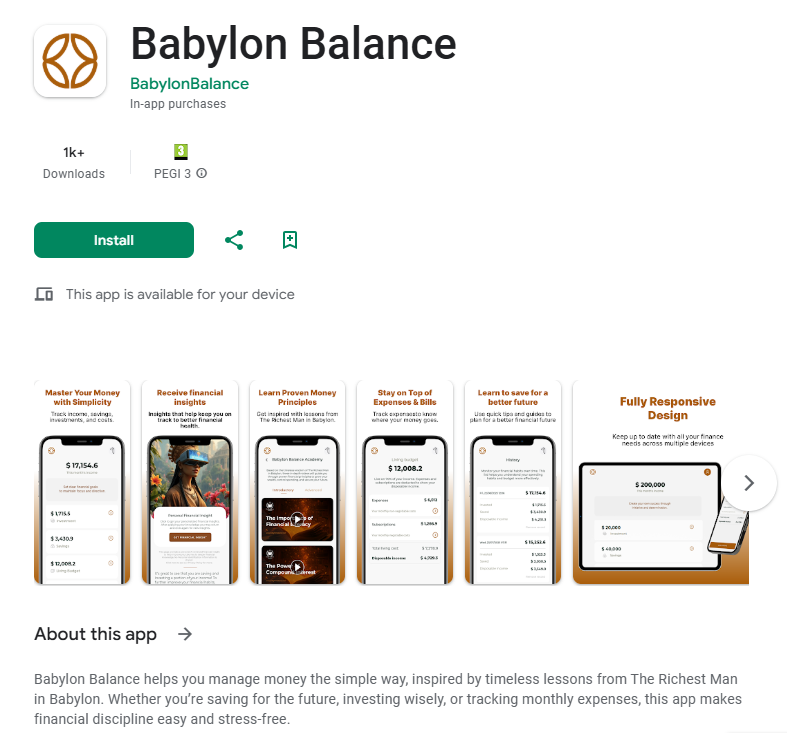
If you would rather not download the app you may try the staging version here:
https://app.babylonbalance.com/

letstalk@hilarymoyo.studio

+27 83 341 2603